
What is ISO 9001:2015?
ISO 9001:2015 is the international standard for Quality Management Systems (QMS), published by the International Organization for Standardization (ISO). It helps organizations ensure they meet customer and regulatory requirements while improving overall efficiency. In this article, we’ll explore the key aspects of ISO 9001:2015, its benefits, requirements, and implementation process.
Universal Certification and Services (UCS) is a leading provider of ISO 9001:2015 certification in the UAE and Saudi Arabia and Worldwide. We assist businesses in achieving global quality standards through professional auditing and certification services.
Understanding ISO 9001:2015
Definition and Purpose
ISO 9001:2015 sets out the criteria for a QMS and is based on several quality management principles, including strong customer focus, process approach, and continuous improvement.
History and Evolution
ISO 9001 was first published in 1987 and has undergone multiple revisions, with the latest version released in 2015, emphasizing risk-based thinking and process efficiency.
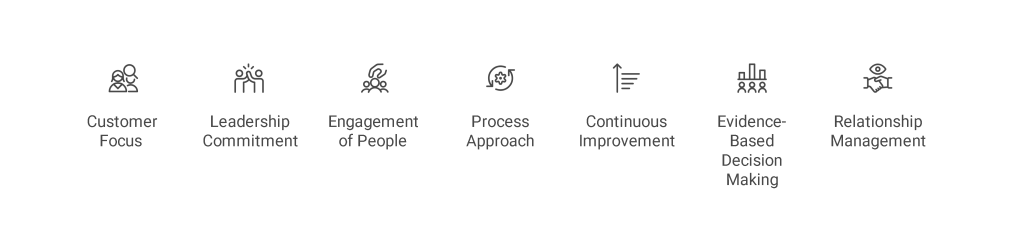
Key Principles
- Customer Focus
- Leadership Commitment
- Engagement of People
- Process Approach
- Continuous Improvement
- Evidence-Based Decision Making
- Relationship Management
Benefits of Implementing ISO 9001:2015
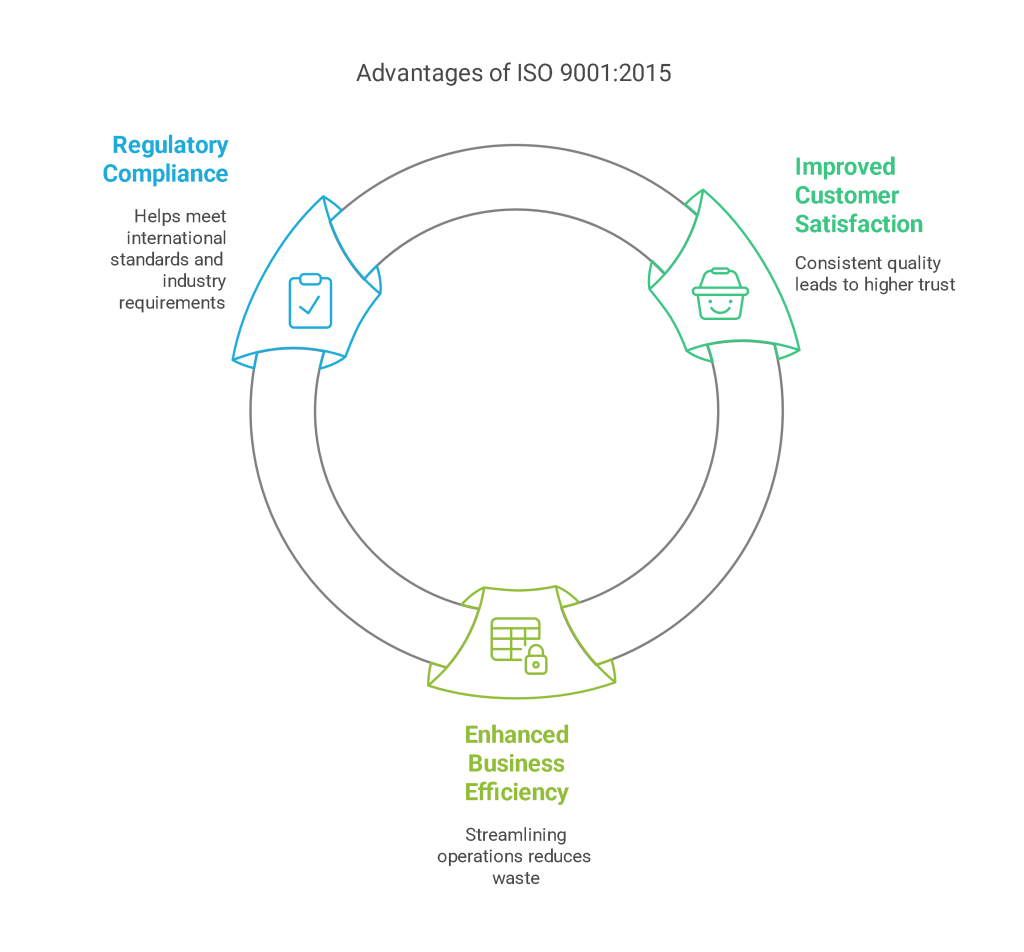
- Improved Customer Satisfaction: Consistent quality leads to higher trust.
- Enhanced Business Efficiency: Streamlining operations reduces waste.
- Regulatory Compliance: Helps meet international standards and industry requirements.
How to Implement ISO 9001:2015
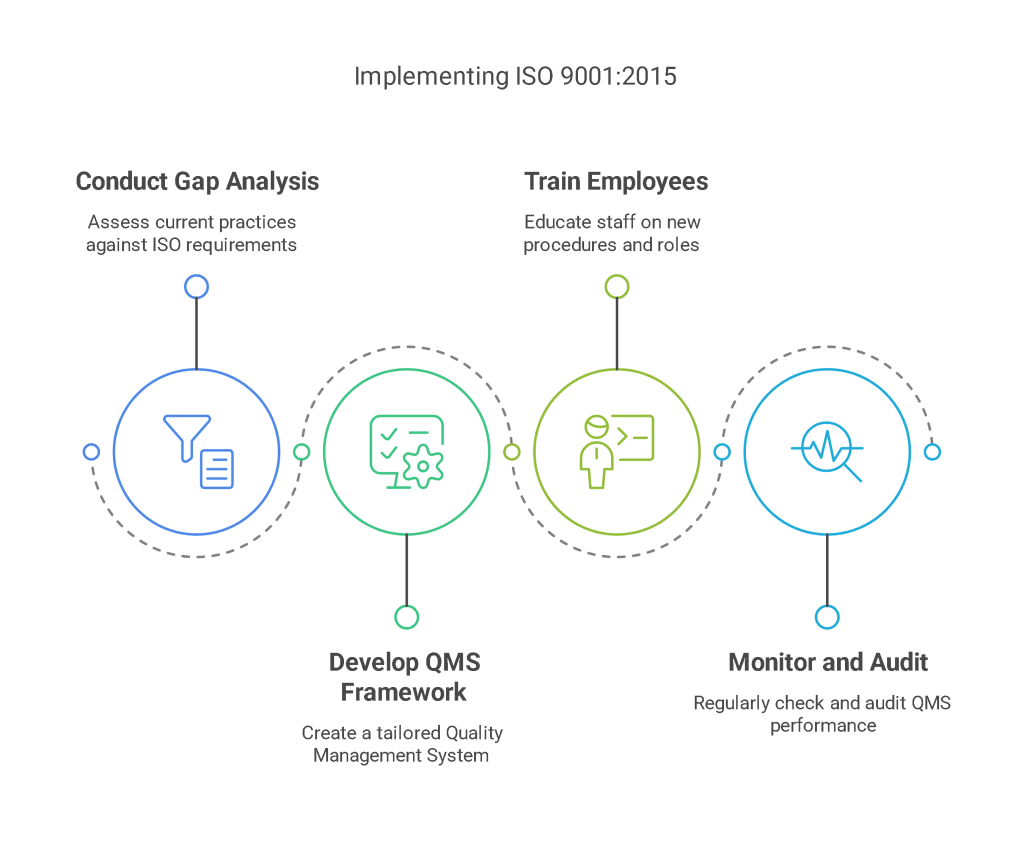
The process of implementing ISO 9001:2015 involves several critical steps to ensure a smooth transition and maintain compliance. Here’s a step-by-step guide on how to implement the ISO 9001 standard:
- Conduct a Gap Analysis: Begin by conducting a comprehensive gap analysis to assess your organization’s current practices and compare them against the requirements of ISO 9001:2015. This helps identify areas that require improvement and ensures a clearer pathway for compliance. UCS (Universal Certification and Services) can assist in conducting a gap analysis to determine where improvements are needed.
- Develop a QMS Framework: Once the gaps are identified, develop a Quality Management System (QMS) framework tailored to your organization’s needs and aligned with ISO 9001:2015. This framework should include policies, procedures, and responsibilities to ensure consistency and quality throughout all processes.
- Train Employees on Quality Procedures: Employee involvement is key to successful ISO 9001:2015 implementation. Provide comprehensive training to employees on the new quality procedures, roles, and expectations to ensure they are equipped to follow the QMS effectively.
- Monitor and Audit Performance Regularly: Continuous monitoring and auditing of your QMS is vital to ensure that it operates as intended. Regular internal audits help identify any weaknesses or nonconformities in the system, allowing for corrective actions to be taken promptly. UCS, as a leading certification body, can assist with conducting periodic internal audits.
Common Challenges in Implementation
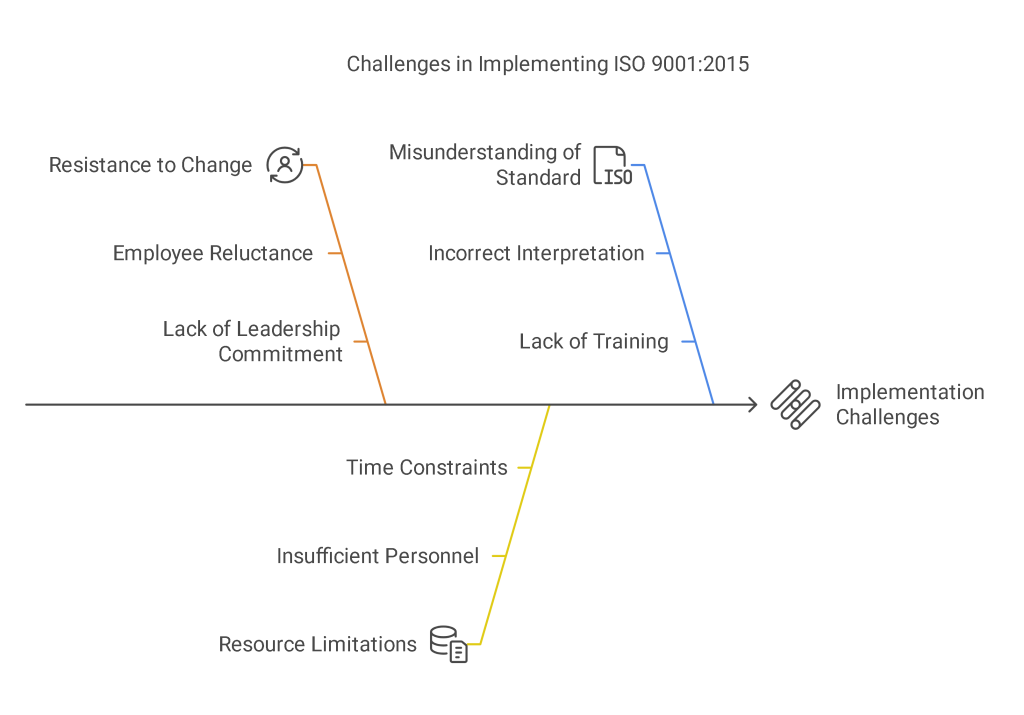
While implementing ISO 9001:2015, organizations often face several challenges, including:
- Resistance to Change Among Employees: Employees may resist adopting new processes or altering established ways of working. Overcoming this resistance requires clear communication, proper training, and leadership commitment to the new system.
- Limited Resources for Documentation: Developing and maintaining the necessary documentation for ISO 9001:2015 can be resource-intensive. It is important to allocate sufficient resources, including personnel and time, to create comprehensive and up-to-date documentation.
- Misunderstanding of Standard Requirements: Organizations may struggle to interpret the standard’s requirements correctly. Working with an experienced consultant or attending ISO 9001:2015 training courses can help clarify these requirements. UCS offers consultations and guidance to ensure you understand and apply the standard correctly.
Maintaining Compliance with ISO 9001:2015
Once your organization has achieved ISO 9001:2015 certification, maintaining compliance is essential for ongoing success. Here are key steps to ensure continuous compliance:
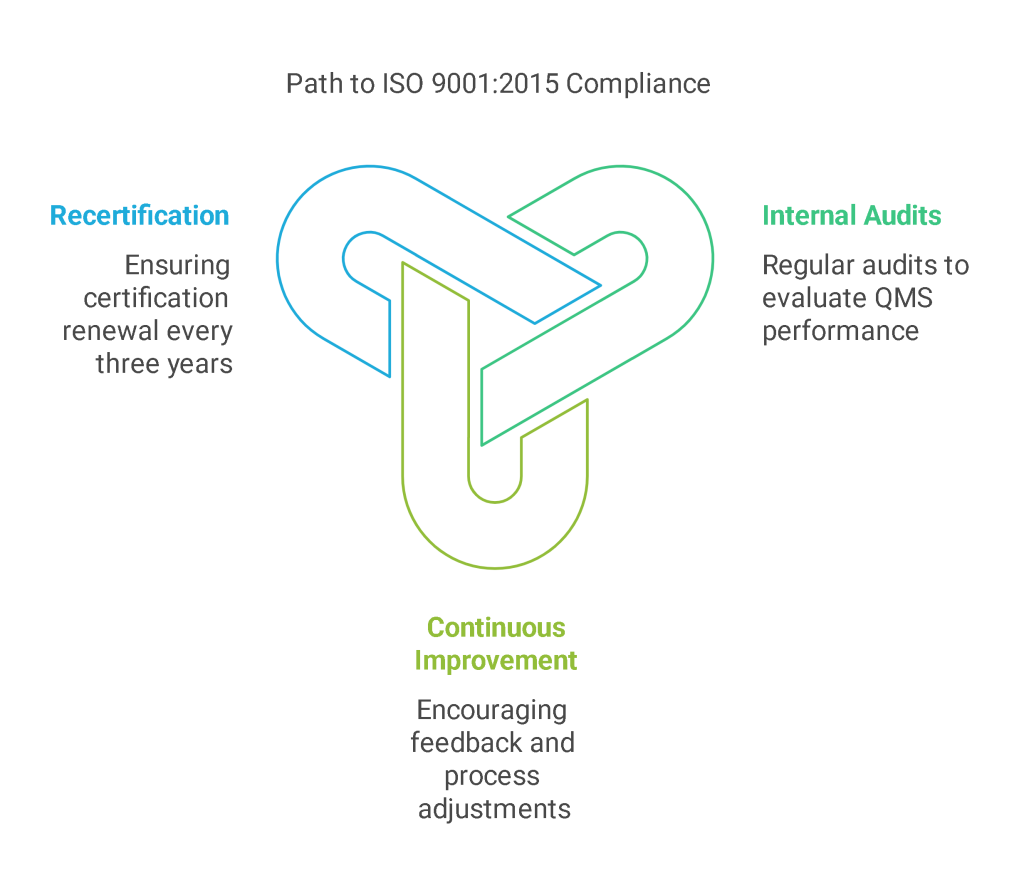
- Conduct Internal Audits Frequently: Regular internal audits are necessary to evaluate the performance of your QMS and ensure that it aligns with ISO 9001:2015 requirements. This helps identify potential issues before they become major problems. UCS provides expert internal audit services to ensure your QMS remains compliant.
- Foster Continuous Improvement Practices: ISO 9001:2015 emphasizes the importance of continuous improvement. Foster a culture of continuous improvement within your organization by encouraging feedback, tracking performance metrics, and making necessary adjustments to processes.
- Undergo Recertification as Required: ISO 9001:2015 certification is valid for three years. Before the certification expires, undergo a recertification audit to ensure ongoing compliance. Regular recertification demonstrates your commitment to maintaining quality standards. UCS is here to support your recertification efforts and ensure a smooth transition.
you can check more information on International Organization for Standardization. or Universal Certification and Services (UCS) for expert guidance on ISO certification services tailored to your business needs.