
ISO Certifications Supporting UAE Ministry of Finance eInvoicing Accreditation
UAE MoF eInvoicing System Explained for Businesses Digitalization is reshaping how financial transactions are created, exchanged, and reported across the UAE. As part of this shift, the Ministry of Finance has introduced an electronic invoicing system that brings consistency, security, and automation to invoice reporting while reinforcing transparency and tax compliance. This initiative marks a structural shift in how organizations generate, exchange, validate, and store invoices within a regulated framework. What Is eInvoicing in the UAE Electronic invoicing refers to the electronic generation, transmission, and storage of invoices in a structured digital format. These invoices are created using defined
ISO 9001 vs ISO 14001 vs ISO 45001 – Explained: Which One is Right for Your Business?
In today’s business world, meeting customer expectations, protecting the environment, and ensuring workplace safety are not just good practices—they’re essential. That’s where ISO standards come in. Among the most widely adopted are ISO 9001:2015 Quality Management Systems (QMS), ISO 14001:2015 Environmental Management Systems (EMS), and ISO 45001:2018 Occupational Health and Safety Management Systems (OHSMS). But what do these standards involve, and what sets them apart? Here’s a clear, practical breakdown. Looking to get ISO 9001, ISO 14001, or ISO 45001 certification? UCS provides accredited certification services with a fast, straightforward process.Get Free Certification Quote Today What is ISO 9001?

ISO Certification Australia: The Ultimate Guide for Businesses (2025)
In the highly competitive Australian market, demonstrating trust and quality is essential for success. For businesses aiming to stand out, achieving ISO certification in Australia is no longer just an advantage—it’s a foundational strategy for sustainable growth, operational excellence, and unlocking new opportunities. But for many business owners, the path to ISO compliance can seem complex. What does the process involve? Is it a worthwhile investment? This ultimate guide provides a clear roadmap to achieving ISO certification in Australia, transforming a complex challenge into a clear path to business excellence. What This Guide to ISO Certification in Australia Covers:

Understanding ISO Certification and Its Value for Modern Organizations
ISO certification is one of the most effective ways for a business to stand out for quality, security, or operational excellence. In today’s competitive market, being ISO certified sends a strong message: your organization is committed to high standards and continuous improvement. But what exactly is ISO? What are the most important ISO standards like ISO 9001, ISO 14001, ISO 27001, and how do you get certified? Let’s break it down clearly. What Does ISO Mean? ISO stands for the International Organization for Standardization, an independent, non-governmental body that develops and publishes international standards. These standards provide guidance and

ISO 27001: Why Cybersecurity Should Be a Top Priority for Every Business
Introduction Let’s be real — the world is swimming in data. And with that data comes a tidal wave of cyber threats. Whether you’re a solo entrepreneur or leading a global enterprise, ignoring cybersecurity is like leaving your front door wide open in a neighborhood full of burglars. This is where ISO 27001 comes in, acting as both your lock and your alarm system. What is ISO 27001? Definition and Purpose This international standard is a globally recognized framework that defines best practices for establishing and managing an effective information security system. It’s a set of rules and procedures

Why ISO Certification Is No Longer a Choice in 2025
Let’s be real — gone are the days when ISO certification was just a fancy feather in your business cap. In 2025, it’s the bare minimum. From regulatory requirements to consumer demands, ISO certification isn’t a “nice to have” anymore — it’s a non-negotiable. But why the sudden shift? Let’s dive in. What is ISO Certification? Brief Overview of ISO ISO stands for the International Organization for Standardization. It’s a global body that creates standards to ensure quality, safety, efficiency, and interoperability across all kinds of industries. ISO’s Role in Standardization Think of ISO as the rulebook for global

Navigating Legal Risks: Safeguarding Your Business Through ISO Standards
As businesses navigate an era of transformation, legal risks pose significant threats that can interrupt operations, harm reputations, and lead to costly litigations. Companies must proactively identify, assess, and manage these risks to safeguard their assets and ensure long-term sustainability. This blog explores into the world of legal risks by taking a closer look on how businesses can navigate legal risks effectively, particularly through the lens of ISO standards, such as ISO 9001, ISO 14001, and ISO 45001 and many more. Exploring Legal Risks in Business Legal risks encompass a wide collection of potential issues that can arise from

ISO Certification in UAE: Comprehensive Guide to ISO 9001, 27001, 45001 & More with UCS
Introduction to ISO Certification in UAE ISO certification in UAE has become a benchmark for business excellence and regulatory alignment. With a rapidly growing economy and global trade environment, businesses in the UAE strive to meet international ISO standards to enhance credibility, efficiency, and competitiveness. This guide will walk you through everything you need to know about ISO certification in UAE, its importance, and how Universal Certification and Services (UCS) can support your journey. What is ISO Certification? ISO (International Organization for Standardization) certification is a globally recognized endorsement that businesses comply with international quality, safety, and efficiency guidelines.

ISO 22301: Ensuring Business Continuity in an Uncertain World
In today’s rapidly changing and unpredictable business landscape, disruptions are not just possible; they are inevitable. Organizations must be prepared to navigate these challenges with resilience and adaptability to thrive in such an environment. Whether it’s a natural disaster, a cyberattack, or a supply chain breakdown, the question isn’t if a business will face a crisis—it’s when. This reality has made business continuity planning not just a strategic advantage but a necessity. ISO 22301:2019, the international standard for Business Continuity Management Systems (BCMS), offers a robust framework for organizations to prepare for, respond to and recover from disruptive incidents.

The Importance of ISO 22301 in Today’s Uncertain Business Climate
In today’s fast-changing environment, businesses are increasingly vulnerable to disruptions such as cyberattacks, natural disasters, and supply chain failures. ISO 22301:2019 is the global standard for Business Continuity Management Systems (BCMS), designed to help organizations prepare for, respond to, and recover from crises efficiently. Why ISO 22301 Certification Matters Key Benefits of ISO 22301 ✔ Operational Resilience – Minimize downtime and recover quickly from disruptions.✔ Regulatory Compliance – Meet industry standards and legal requirements.✔ Competitive Edge – Demonstrate reliability and commitment to continuity.✔ Cybersecurity Enhancement – Strengthen defense mechanisms against cyber risks.✔ Supply Chain Risk Management – Reduce vulnerabilities in business dependencies.✔ Stakeholder Confidence – Gain trust from customers, investors, and partners. ISO 22301 Certification

Transform Your Business with ISO Certification Services in UAE Unlock Success with UCS
In today’s competitive business environment, achieving ISO certification is essential for enhancing business credibility and efficiency. ISO certification services in Dubai offer numerous advantages, including improved customer satisfaction, operational efficiency, and global market recognition. Whether you’re aiming for ISO 9001 certification in Dubai or seeking advice from ISO consultants in Abu Dhabi, achieving ISO certification can set your business on the path to success. Let’s explore how ISO certification in UAE can transform your business and why it matters. Introduction ISO Certification refers to the formal recognition of a company meeting the standards set by the International Organization for
ISO 9001 Certification in UAE: Your Guide to Quality Success
What is ISO 9001:2015 Certification? ISO 9001:2015 is a globally acknowledged benchmark for Quality Management Systems (QMS). It provides a structured framework for enhancing business processes, ensuring efficiency, and delivering consistent quality. Companies in the UAE that implement ISO 9001 can enhance customer satisfaction, streamline operations, and gain a competitive edge in the global market. Understanding Quality Management Systems (QMS) A Quality Management System (QMS) is a structured framework that enables organizations to meet customer expectations and comply with regulatory requirements. It enhances process efficiency, improves product and service quality, and strengthens customer relationships. ISO 9001 certification in UAE
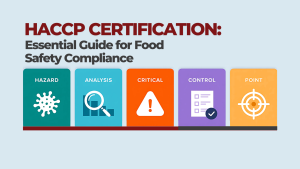
HACCP Certification: Essential Food Safety Guide
Introduction HACCP Certification is a critical component of food safety, ensuring that businesses follow systematic approaches to prevent food hazards. This certification is recognized globally and is a requirement for many food-related industries. At Universal Certification and Services (UCS), we provide expert guidance and support for obtaining HACCP certification, helping your business meet essential food safety standards. What is HACCP? HACCP (Hazard Analysis and Critical Control Points) Certification is an internationally recognized system for ensuring food safety. It helps businesses identify, evaluate, and control hazards in food production to prevent contamination and ensure safe consumption. In the UAE, HACCP

How Can ISO/IEC 27001 Impact Your Business Data Security?
In today’s digital landscape, the importance of safeguarding business data cannot be extreme. As cyber threats continue to evolve, organizations must prioritize robust security measures to protect sensitive information. One of the most effective frameworks for ensuring data security is ISO/IEC 27001:2022, an internationally recognized standard for Information Security Management Systems (ISMS). In this blog, we’ll explore how ISO/IEC 27001 can significantly impact your business’ data security, providing a structured approach to managing risks and building up your digital defence. Understanding ISO/IEC 27001: A Brief Overview ISO/IEC 27001 is part of the ISO/IEC 27000 family of standards, which outlines

ISO 42001:2023 Information Technology, Artificial Intelligence, Management System
1. Introduction to ISO/IEC 42001:2023 1.1. What is ISO/IEC 42001:2023? ISO/IEC 42001:2023 is an international standard designed to establish a structured management system for organizations leveraging artificial intelligence (AI) technologies. It serves as a guide to manage risks, ensure ethical governance, and align AI operations with global benchmarks. This standard, much like a GPS for businesses, offers a clear route to navigate the complexities of implementing and maintaining AI systems. It emphasizes ethical responsibility, safety, and continuous improvement, ensuring AI technologies benefit society without unintended consequences. 1.2. Historical Context and Need for the Standard As AI technology exploded in
What is ISO Certification, and How Can We Get ISO 9001 in 2025?
Introduction: The Future of Business Excellence with ISO Certification in 2025 In 2025, ISO certification is no longer optional—it’s a necessity for businesses striving for quality, sustainability, and global recognition. ISO certifications are the gold standard for businesses to demonstrate excellence, and ISO 9001 leads the way as the most popular certification for Quality Management Systems (QMS). Ready to start? Explore the ISO 9001 Documentation Toolkit for everything you need to streamline the certification process. ISO Certification: A 2025 Business Imperative What is ISO Certification? ISO certification is a globally recognized endorsement that ensures a business meets international standards
ISO 27001 Toolkit: Unlocking Compliance and Simplifying Certification
The ISO 27001 toolkit is an indispensable resource for organizations striving to meet the stringent requirements of the ISO/IEC 27001:2022 standard for Information Security Management Systems (ISMS). With cyber threats growing in complexity, achieving ISO 27001 certification has become a critical benchmark for businesses worldwide. This blog delves into what the toolkit offers, why it’s vital, and how it simplifies your journey toward certification. What is the ISO 27001 Toolkit? An ISO 27001 toolkit is a comprehensive collection of templates, documents, policies, and procedures designed to streamline the implementation of an ISMS. Whether you’re a small business or a

Basic principles of risk management
In today’s energetic business environment, the ability to manage risks effectively is crucial for organizational success. Since risk management is not just about avoiding dangers; it also covers identifying opportunities and making informed decisions that enhance an organization’s resilience and performance, hence provides a comprehensive framework for managing risks thoroughly and transparently. One of the most popular standards for managing risks is the ISO 31000:2018. In this blog, we will explore the principles of risk management as outlined in the ISO 31000, and explore their relevance in the context of achieving ISO certifications like ISO 9001, ISO 14001, and
Understanding Internal Audits Key Risks
Internal audits play a crucial role in ensuring the effectiveness of an organization’s management system. They provide an opportunity to identify non-conformities, assess the implementation of processes, and foster continual improvement. However, the process of conducting internal audits has some challenges and risks. Below we’ll explore the key risks associated with internal audits and we’ll present some strategies to mitigate them, particularly within the context of ISO standards; like ISO 9001:2015. Key Risks In Internal Audits How to Mitigate Risks in Internal Audits Connecting Internal Audits to ISO Standards Internal audits are a critical component of ISO standards, like